
10 Signs of Sensory Overload Every Parent Should Know
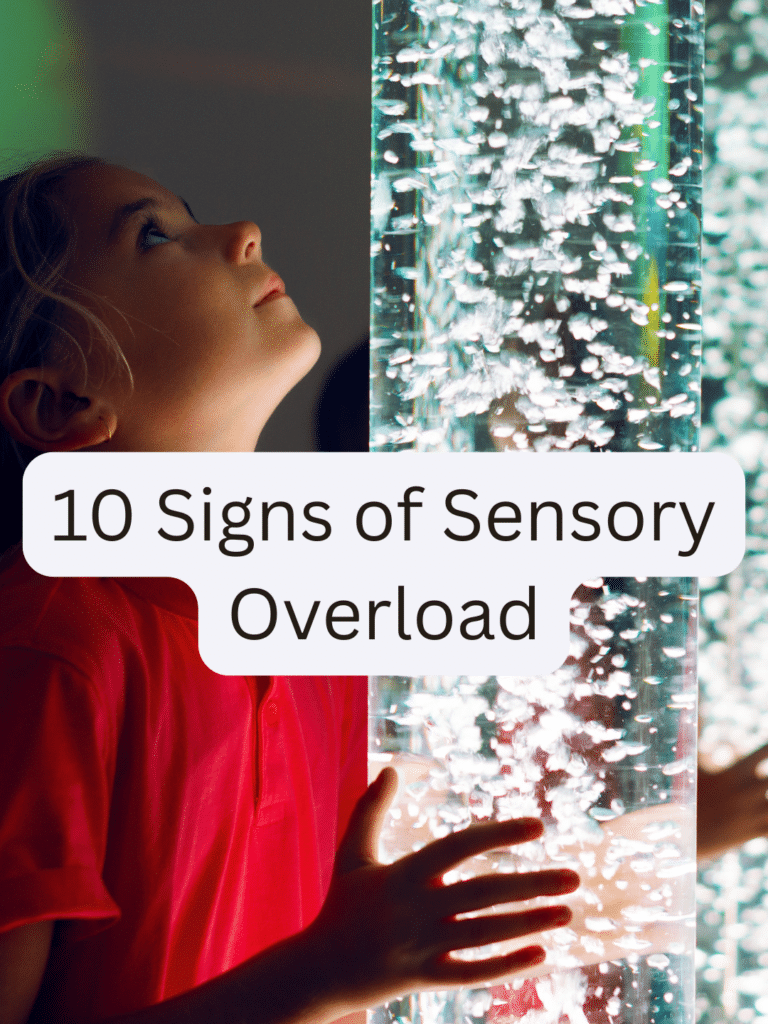
Is My Child Misbehaving or Overwhelmed? 10 Signs of Sensory Overload
Your child is covering their ears in the grocery store.
They refuse to wear certain clothes.
They melt down when the lights are bright.
They become overwhelmed in crowded places.
They suddenly scream when everyone else seems completely fine.
And you may find yourself wondering:
“Is my child misbehaving, or is something else going on?”
Sometimes what looks like difficult behavior may actually be a child becoming overwhelmed by the sensory information around them.
Sensory processing is the way our nervous system receives, organizes and responds to information from our environment and our own bodies.
For some children, certain sensory experiences can feel much bigger, more intense or more difficult to manage.
That can affect behavior, attention, participation, learning and emotional regulation.
What Is Sensory Overload?
Sensory overload can happen when the nervous system is receiving more sensory information than a child can comfortably process at that moment.
Think about everything your child may be processing at once:
- Voices
- Music
- Bright lights
- Movement
- Touch
- Smells
- Clothing
- Food
- Temperature
- Crowds
- Physical sensations inside their body
For some children, this information becomes overwhelming.
When that happens, the child may not have the ability to calmly explain:
“There is too much sensory information happening right now.”
Instead, you may see behavior.
10 Signs Your Child May Be Experiencing Sensory Overload
1. Covering Their Ears
A child may cover their ears around:
- Vacuums
- Hand dryers
- Crowds
- Loud music
- School assemblies
- Restaurants
This can be a sign that certain sounds are uncomfortable or overwhelming.
2. Becoming Extremely Upset by Clothing
Some children strongly dislike:
- Tags
- Seams
- Certain fabrics
- Tight clothing
- Socks
- Shoes
- Waistbands
What looks like “refusing to get dressed” may actually involve tactile sensitivity.
3. Melting Down in Crowded Places
Your child may seem fine at home but fall apart at:
- Birthday parties
- Restaurants
- Stores
- Sporting events
- School events
The difference may be the amount of sensory information in the environment.
4. Becoming Overwhelmed by Messy Play
Some children don’t want:
- Paint on their hands
- Sand between their fingers
- Play-Doh
- Wet grass
- Certain foods touching their skin
Again, the behavior may be communicating discomfort.
5. Suddenly Needing to Escape
A child may:
- Run away
- Hide
- Cover their face
- Ask to leave
- Become increasingly agitated
This can happen when sensory demands become too high.
6. Becoming Irritable After a Busy Day
Sometimes the sensory overload isn’t obvious until later.
A child may hold it together at school and then fall apart at home.
Parents may hear:
“He was perfect at school.”
Then experience a massive meltdown as soon as the child gets home.
This doesn’t necessarily mean the child is choosing when to behave.
They may simply have reached their limit.
7. Seeking Constant Movement
Some children respond to sensory needs in the opposite direction.
They may constantly:
- Jump
- Spin
- Crash
- Run
- Climb
- Push
- Pull
- Chew
- Touch everything
This can be a form of sensory seeking.
Not every active child is sensory seeking, but persistent movement-seeking behavior can be worth exploring when it interferes with daily activities.
8. Becoming Upset During Transitions
Transitions can require a child to process several changes simultaneously.
For example:
Stop playing → clean up → put shoes on → get in the car → leave the house
A child who is already having difficulty regulating may experience the transition as overwhelming.
9. Having Strong Reactions to Food
Sensory processing can also affect eating.
A child may reject food because of:
- Texture
- Smell
- Temperature
- Appearance
- Mixed textures
- Food touching other food
This is one reason sensory processing and feeding should not always be viewed as completely separate issues.
10. Having Meltdowns That Seem “Too Big” for the Situation
A small problem can trigger a very large reaction.
The parent may think:
“Why is this such a big deal?”
But the actual trigger may not be the entire problem.
Your child may already be carrying sensory stress from everything that happened before that moment.
The spilled cup may simply be the final straw.
Is Sensory Overload the Same as a Tantrum?
Not necessarily.
A tantrum and a sensory meltdown can sometimes look similar from the outside.
But they can have very different underlying causes.
A child having a tantrum may be trying to influence what happens next.
A child experiencing sensory overload may be losing the ability to effectively regulate their response to what is happening around them.
The distinction isn’t always obvious, and children can experience both.
The goal shouldn’t be to label every difficult behavior.
The goal is to understand what is happening.
What Should I Do During Sensory Overload?
When a child is highly overwhelmed, more talking isn’t always better.
Try to:
Reduce sensory demands
Move away from the noise, crowd or activity if possible.
Lower your voice
Your calm can help reduce additional stimulation.
Use fewer words
A child who is overwhelmed may not be able to process a long explanation.
Give physical space
Don’t assume your child wants a hug or physical contact.
Offer predictable choices
For example:
“Quiet room or car?”
instead of:
“Why are you acting like this?”
Wait for regulation
Teaching usually works better after the nervous system has calmed down.
What Should I Avoid?
Try to avoid statements such as:
“You’re fine.”
“It’s not that loud.”
“Stop overreacting.”
“You’re making a big deal out of nothing.”
Even when the sensory experience seems minor to us, it may feel very different to the child.
Instead, try:
“That was really loud.”
“I can see this is too much right now.”
“Let’s find somewhere quieter.”
This doesn’t mean giving a child everything they want.
It means recognizing what their nervous system may be experiencing before addressing the behavior.
How Can Occupational Therapy Help?
Pediatric occupational therapy can help families understand how sensory processing may be affecting:
- Regulation
- Attention
- Play
- Feeding
- Dressing
- Hygiene
- School participation
- Sleep routines
- Community activities
- Daily living skills
An OT evaluation can help identify patterns rather than simply treating isolated behaviors.
For example:
A child who refuses socks, hates messy foods, avoids haircuts and becomes overwhelmed in crowds may have several behaviors that seem unrelated.
Looking at the sensory patterns can help connect the dots.
What If My Child Has Autism or ADHD?
Sensory differences can occur alongside autism, ADHD and other developmental differences, but sensory behaviors alone do not establish a diagnosis.
Children can have sensory sensitivities or sensory-seeking behaviors for many different reasons.
A comprehensive developmental picture is important.
If you have concerns about your child’s development, behavior or participation, talk with your pediatrician and consider whether a developmental or therapy evaluation would be helpful.
What We Commonly See in Pediatric Therapy
One of the most important things we remind families is:
Behavior is information.
That doesn’t mean every behavior has a sensory explanation.
It means we should be curious before we assume.
When a child repeatedly struggles with the same situation, we can ask:
- What happened immediately before?
- What sensory information was present?
- Was the child hungry or tired?
- Was the environment crowded?
- Was there a transition?
- Was the task too difficult?
- Did the child have a way to communicate?
- What happened after the behavior?
These questions can help us understand the pattern.
The KTN Takeaway
Before asking:
“How do I stop this behavior?”
try asking:
“What is my child trying to communicate?”
Sometimes the answer is:
“This is too much.”
When we understand the reason behind a behavior, we can begin teaching children the skills they need to participate more successfully instead of simply asking them to tolerate something that may currently be overwhelming.
Is Your Child Frequently Overwhelmed?
If your child regularly struggles with sensory experiences, emotional regulation, transitions, feeding, dressing, school participation or everyday activities, a pediatric occupational therapy evaluation may help identify what is getting in the way.
Kidz Therapy Networks provides pediatric OT, PT, Speech and feeding services for children and families in Suwanee and surrounding North Atlanta communities.
[Learn more about pediatric occupational therapy or contact KTN to discuss an evaluation.]